
AI Search Impact on Local Business SEO
Local Businesses, Customer Engagement, Map Ranking, AI Search Impact, Digital Marketing
When “Perfect” SEO Isn’t Enough: How AI Search Is Quietly Stealing Local Customers
Many local businesses have done everything right online—strong SEO, top map ranking, glowing reviews—yet are seeing fewer calls, website visits, and walk-ins. The missing piece isn’t another keyword or citation. It’s the rapid rise of AI-driven search experiences that sit between you and your customers.
Why High Map Ranking No Longer Guarantees High Customer Engagement
For years, the playbook was clear: optimize your website, polish your Google Business Profile, collect reviews, and fight your way into the top three map results. Those positions still matter—but AI search is changing what customers actually see and do after that first query.
Modern search engines increasingly use AI overviews, chat-style answers, and personalized suggestions to decide which local businesses get attention. As Forbes notes, AI is now shaping both traditional SEO and map search by analyzing behavior, context, and intent—not just keywords and proximity (Forbes, 2023; Bernard Marr, 2023). That means two businesses with similar SEO and map ranking can see very different levels of customer engagement depending on how well they fit AI’s “best answer” logic.
How AI Search Is Filtering Local Businesses Before Customers Ever Click
AI-driven search tools don’t just list options; they curate them. When someone asks, “Where’s the best coffee near me that’s quiet to work in?” or speaks into a voice assistant, the AI may:
Combine map ranking with behavioral data—which spots people stay at longest, where repeat visits are highest, which listings get the most calls or direction requests.
Prioritize businesses that match very specific intent signals (quiet, kid-friendly, late-night, accessible) even if they are not #1 on the map.
Surface one or two “best” recommendations in an AI answer box, rather than a full list of local businesses.
Research on AI and map search shows personalization, real-time data, and semantic understanding are becoming core ranking factors (Search Engine Land, 2023; TechRadar, 2023). In practice, this means AI can quietly route customers to competitors—even when your listing technically outranks them on the map.
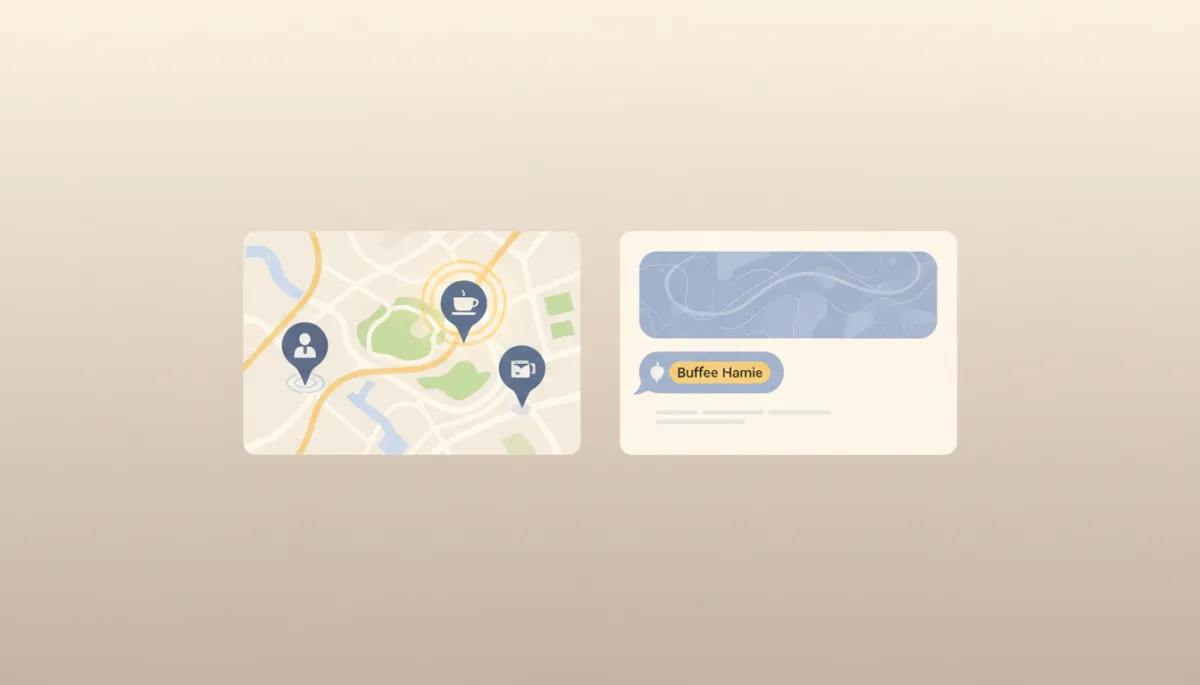
AI search often narrows many local options down to just one or two picks.
The New Definition of Customer Engagement in an AI-First Search World
For local businesses, Customer Engagement is no longer just about getting a click from the map. AI looks at what happens after that click and uses those signals to decide who deserves to be recommended next time. That can include:
How often people call, message, or book through your profile
Whether visitors bounce quickly from your website or stay and explore
The frequency and freshness of reviews, photos, and Q&A activity
Repeat visits, loyalty program usage, or check-ins that AI can infer from user behavior
💡 Pro Tip: Treat every digital touchpoint—website, messages, reviews, social—as a ranking signal. AI doesn’t just read your content; it reads how customers respond to it.
Turning AI Search Impact Into an Advantage: Practical Moves for Local Businesses
1. Upgrade from “Findable” to “Clearly the Best Fit”
If AI is trying to pick the single best answer, your listing and website must make that decision easy. Refine your Digital Marketing messaging to emphasize what you’re uniquely great at: “quiet workspace,” “family-friendly,” “emergency same-day service,” “vegan-friendly,” or “Spanish-speaking staff.” Use those phrases in:
Your Google Business description and services
Page titles and headings on your website
FAQ content that mirrors how real people ask questions, including voice-style queries
2. Make Engagement Easy Directly From Search Results
AI tools favor businesses that help users accomplish tasks quickly. According to CX and customer engagement research, agentic AI is increasingly expected to complete actions, not just chat (CX Today, 2026). Help it help you by:
Enabling online booking, messaging, and ordering on your profiles
Keeping hours, services, and pricing accurate across all local listings
Responding quickly to chats and reviews, signaling reliability and responsiveness
3. Blend Local SEO With Human, Community-Focused Marketing
AI may be the new gatekeeper, but it still learns from human behavior. Strong offline and online communities generate the signals AI rewards: branded searches, direct visits, repeat customers, and authentic reviews. Current engagement trends show that community building, transparency, and simple, honest content outperform flashy campaigns (Capita, 2026; Engagio, 2026).
Share behind-the-scenes stories, staff highlights, and local partnerships on your site and social channels.
Encourage reviews that mention specifics—“quiet,” “great for kids,” “fast repair”—which AI can interpret semantically.
Participate in local events or collaborations that drive branded searches for your business name.
From Fighting Algorithms to Guiding Them
The rise of AI search doesn’t mean local businesses are powerless. It means the rules of visibility have shifted from “rank highest” to “engage best.” Your map ranking is still a foundation—but real growth now depends on how convincingly your digital presence answers the question, “Is this the right place for me right now?”
By aligning your Digital Marketing, local SEO, and real-world customer experience around clear differentiation and easy engagement, you can turn AI search impact from a threat into a competitive edge. Instead of simply showing up in results, your business can become the obvious choice the AI—and your customers—keep coming back to.
